Student. Father. Teacher.
Greg
Granger
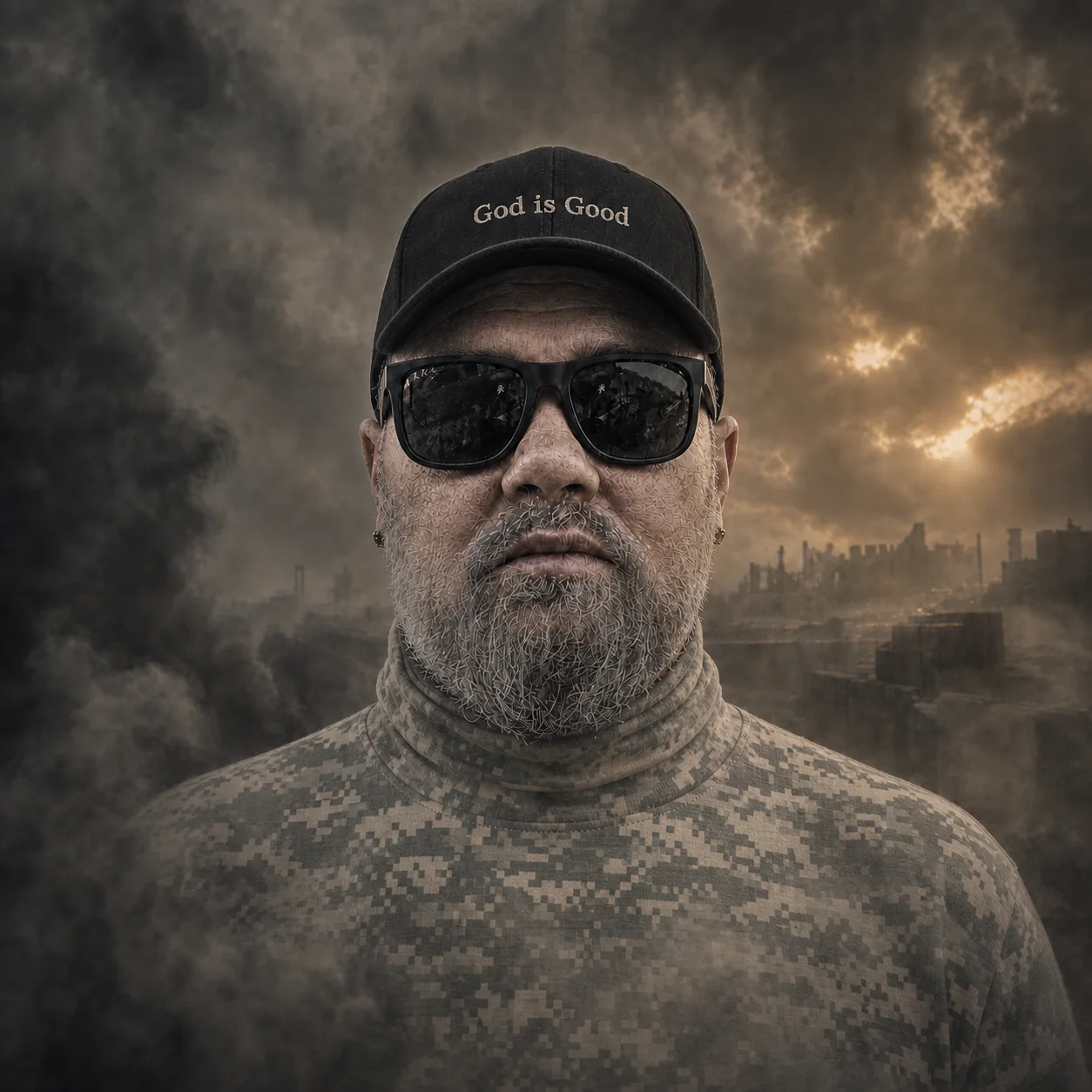
Worship leader, singer, guitarist, bassist, songwriter, composer, and the creative director behind FrequentSuspicion—building truthful public work from lived experience, faith, documentation, and the slow discipline of carrying grace forward.
Work
Connected
projects
Greg turns lived experience, careful documentation, faith, and creative practice into music, software, testimony, and resources people can use. Those public works now live inside Stronger by Grace instead of requiring visitors to understand a collection of separate properties.
The public SBG experience connects the Testimony music and witness library, Biblical Counseling, Daily Devotions, Theology Explorer, World Missions, prayer care, the Gospel invitation, downloads, and Greg’s first-person witness. Each area keeps its own responsibility while sharing one navigation system, visual language, privacy boundary, and path toward meaningful action.
After sign-in, the same SBG software provides Overview, People, Prayer, Care, and Study the Word. These workspaces connect member relationships, pastoral follow-through, Scripture study, prayer, research, and sermon preparation without placing protected ministry records in the public site map.
The tools are designed for the places ministry actually happens. Important features can continue working in remote areas with no cellular service, then reconnect when service becomes available. A coordinated update can be prepared once and made available across more than 210 countries, allowing churches and ministry teams to receive improvements without rebuilding or manually replacing every installation.
The same foundation can be prepared for another church in less than thirty minutes. Its name, colors, routes, resources, permissions, and ministry purpose can be adapted while the proven underlying structure remains intact. In simple terms, Greg builds the dependable parts once, tests them carefully, and makes them reusable—so a church can begin with a mature system instead of starting again from an empty page.
That systems approach is central to Greg’s development style and leadership. He looks for duplication, disconnected work, and fragile handoffs, then builds durable relationships between content, design, technology, care, and the people responsible for carrying the work forward.
Veteran safety
For the
22
Immediate, veteran-aware pathways are needed for moments when war follows someone home—whether the danger is physical, emotional, relational, or spiritual. Safety comes before explanation.
As a veteran who has struggled with suicidal ideation for years, Greg does not believe that struggle defines God’s love for him or proves an absence of God’s goodness in his life. He has been blessed to grow toward a different understanding: the voice urging destruction is Satan’s assault on his life, not the voice of Christ and not a verdict on his worth.
That conviction does not make the danger less real or remove the need for help. It gives Greg a reason to resist the lie, bring the struggle into the light, accept support, and continue choosing life. Faith, trusted human presence, pastoral care, professional treatment, crisis response, and practical safety planning can stand together rather than compete with one another.
Greg connects this work to the wider system by treating veteran safety as a first-order design requirement, not a separate campaign. Crisis pathways must be easy to find, language must remain direct under stress, and resources must lead toward real help without forcing someone through an unnecessary sequence of pages.
The long-term goal is continuity: recognition, private reflection, practical next steps, pastoral care, and professional or emergency support should reinforce one another while respecting the limits of each.
Resources
Find what
helps
Education, safety planning, counseling resources, practical tools, music, ministry systems, and private self-reflection belong together where people can reach them without navigating organizational or technical boundaries.
Greg plans resources around the decision a person is actually trying to make. A self-check can help name a pattern; education can add context; a practical tool can preserve clarity; music can provide language for what is difficult to say; and a direct care or safety route can help someone act. The value comes from the sequence and connection, not merely from having more material.
The principal experiences are organized below by what they help someone do inside Stronger by Grace. Public resources open directly; protected ministry and study tools begin at the signed-in account workspace.
Care and safety
Biblical CounselingScripture-governed guidance, careful questions, prayer, and supportPrayerConfidential prayer care and responsible follow-throughStudy and ministry
Daily DevotionsDated Scripture, reflection, and prayerTheology ExplorerDoctrine studies organized by subject and ScriptureWorld MissionsNation dossiers, unreached peoples, and informed prayerMinistry workspaceOverview, People, Prayer, Care, and Study the Word after sign-inMusic and witness
TestimonyMusic, witness, lyrics, artwork, and the story behind the workDownloadsKeep chosen music available on this deviceYou’re InvitedThe Gospel invitation at the center of the workWitness
Lived
experience
Greg’s credibility does not come merely from having lived a long or eventful life. It comes from passing through war, divorce, family brokenness, failure, success, isolation, responsibility, and rebuilding—experiences that, taken alone or together, could bury even the strongest of men.
War taught him what prolonged danger does to the body, the mind, relationships, faith, and the ability to feel safe after the immediate threat has passed. Divorce and family fracture exposed the grief of losing not only a relationship, but routines, identity, imagined futures, trust, and a sense of home. Failure forced an honest accounting of choices, limits, consequences, and the need to begin again.
Success carried its own tests. Achievement can create responsibility, pressure, visibility, and the temptation to confuse momentum with wholeness. Greg’s experience includes learning that building something meaningful does not erase grief, and that leadership requires the discipline to remain accountable when things are working as much as when they are falling apart.
The credibility is in what followed: surviving without pretending survival made everything simple; documenting what happened; examining what could have been done differently; accepting accountability; and turning hard-earned understanding into music, systems, resources, and safer paths for other people.
That history shapes how he leads: listen closely, preserve the record, distinguish urgent danger from long-term repair, and do not build systems that require vulnerable people to repeatedly prove what happened. Experience becomes useful when it produces clearer choices, safer structures, and greater accountability.
Testimony also connects the creative and practical work. The same truth may be carried through a song, explained through education, and translated into a tool—but each form has a different responsibility and must be presented honestly.
Lived-experience authority is not a legal, medical, clinical, or academic credential. Educational resources do not replace professional care, legal advice, emergency services, or individualized safety planning.
Music
Music and
worship
FrequentSuspicion is the music and testimony project of Greg Granger. Greg created the project and serves as its songwriter, composer, lyricist, and creative director.
The music holds what ordinary explanation cannot always carry: literal war, spiritual warfare, coercion, grief, accountability, survival, prayer, and grace. Rap, metalcore, Christian rock, acoustic music, and EDM provide different forms for the same continuing witness.
The combination of rap and metalcore is especially important to the work. Rap creates room for exact lyrics: names, sequences, contradictions, memories, and the words that cannot be reduced to a general feeling. Metalcore gives those exact words an emotional and physical environment large enough to hold their weight. Together, they allow detailed testimony to remain intelligible while the music carries the pressure, rupture, anger, fear, and release surrounding it.
That precision matters in trauma-informed care and grief processing. A person may need to name what happened in specific language, return to it without having the account softened, and hear that the intensity surrounding those words is not being dismissed. The songs do not replace counseling, pastoral care, or clinical support; they create an honest space in which memory, grief, prayer, and meaning can be approached without forcing them into vague or comfortable language.
The style follows what the song needs to carry. Some songs require a somber, restrained space where grief, prayer, or confession can remain exposed without being rushed. Others need to build until they explode into a space of their own—giving anger, urgency, battle, or deliverance enough force to be heard honestly. A song may need the direct cadence of rap, the physical rupture of metalcore, the congregational reach of Christian rock, the vulnerability of an acoustic arrangement, or the relentless motion of EDM. The range is not variety for its own sake; it is a commitment to let each testimony take the form that tells its truth most faithfully.
Worship is present across that entire range. It can be quiet surrender, a cry from inside the war, a demand for truth, an act of remembrance, or an eruption of praise after survival. The sound may change, but the center remains Christ and the grace that carries people through what should have destroyed them.
Albums and songs are planned as connected movements rather than isolated releases. Lyrics, visual language, testimony, pastoral context, and the listening experience are developed together so the work can confront chaos without surrendering hope—and name war without losing sight of Christ.
Written, composed, and creatively directed by Greg Granger. Released as FrequentSuspicion.
Open TestimonyMinistry
Prayer and
service
The work is meant to serve people, not merely describe pain. Prayer care, safety resources, pastoral tools, teaching, and creative witness remain connected by one commitment: tell the truth, protect people, and build what helps.
Greg’s ministry planning begins with relationship and stewardship. Technology can create access, but it cannot replace presence, discernment, professional care, or the responsibility to respond wisely when someone is in danger. Each part of the system should help the right form of care become easier to reach.
The prayer systems are designed to carry a request beyond the moment it is submitted. Each need entrusted through them becomes a daily reminder for Greg to pray specifically for that person and whatever they have presented—grief, fear, family fracture, illness, isolation, discernment, gratitude, or a need they cannot yet fully name. The system helps preserve the commitment so prayer is not reduced to a form receipt or a single response.
For Greg, this is one of the most important ways technology serves ministry: it helps him remember, return, and continue praying. The request remains connected to a real person, and the daily reminder becomes a repeated act of care before Christ.
Leadership here means carrying both the immediate request and the longer horizon: respond to the person in front of you, strengthen the process behind that response, and prepare others to continue the work faithfully.
Ask for prayerDocumentation
Preserved with
purpose
The entire build—from the first written idea through songwriting, composition, visual development, system design, release planning, and revision—is documented as part of the work itself. Decisions are preserved alongside outcomes so the path can be understood, not merely the finished product.
That record is a legacy for Greg’s children: an honest account of what he built, why he built it, what he learned, how faith shaped the work, and how each project became connected to something larger. It preserves the years of strategy, experimentation, leadership, grief, prayer, and persistence that would otherwise disappear behind a finished screen or song.
It is also preserved for people who need music dense enough to follow the full roller coaster of grief, PTSD, family brokenness, isolation, spiritual warfare, anger, memory, and grace. Some experiences cannot be processed through a single emotional register. The documentation, lyrics, music, and testimony remain connected so others can trace the movement from rupture and confusion toward language, meaning, prayer, and the possibility of carrying life forward.
Public testimony remains Greg’s first-person account and lived experience. The record is maintained with purpose, clear source ownership, and respect for the boundaries between artistic expression, education, pastoral reflection, and professional care.